In accordance with the UN-led global Science Based Targets Initiative (SBTI), in 2022 we committed to reducing our greenhouse gas emissions in scope 1 and 2 in line with the 1.5°C temperature increase scenario by the year 2030. This corresponds to a reduction of 42% from the base year 2021.
However, our climate accounting data from multiple consecutive years shows that less than 10% of our greenhouse gas emissions result from our own energy consumption within scopes 1 and 2. Over 90% are scope 3 emissions, with barley cultivation as the most significant source.
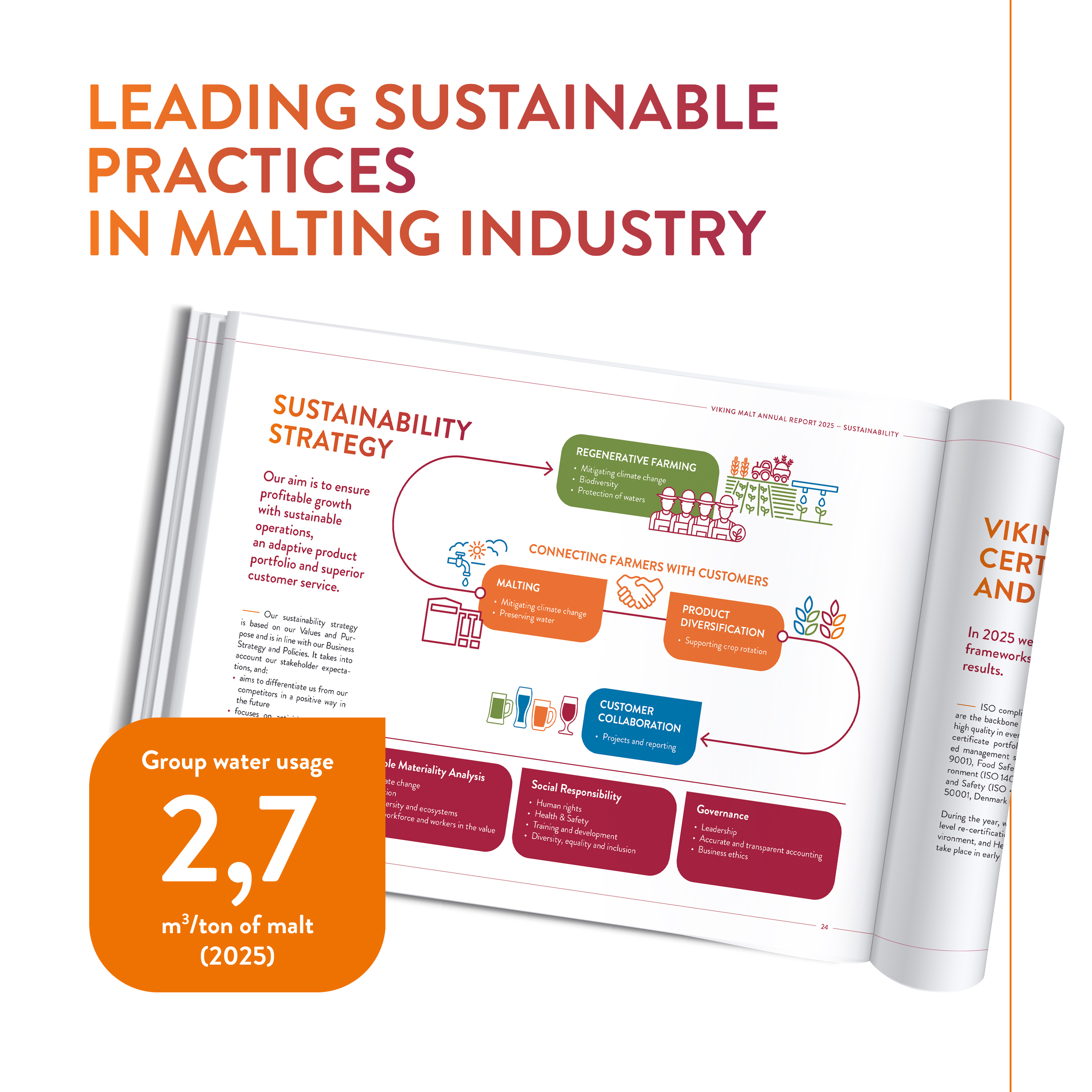
To address these barley cultivation emissions, we promote and support farmers on the transition to regenerative farming. Through our partnership with Improvin’ we are using a platform for collecting primary data from farming, at the same time welcoming our farmers to closer cooperation with our customers. Additionally, we want to contribute to regenerative farming and therein crop rotation with new demand for faba beans. For that end we created a bean-based ingredient Sprau® that can be used to partly replace barley-based malt in beer and whisky.
To support and monitor holistically sustainable farming we utilize the SAI Farm Sustainability Assessments. We expect our suppliers and farms to participate in assessing, improving, and validating on-farm sustainability via the four pillars of environmental stewardship, social responsibility, economic viability, and responsible business conduct.
We report and assess our sustainability journey through the EcoVadis and the UN Global Compact framework. In addition, in our corporate Annual Report we disclose our progress towards our goals.